Amazon reported $168.3 billion of operating cash flow for the twelve months to September 2026, alongside a $42.4 billion free-cash-flow outflow. Its 29 October results attributed the deterioration in free cash flow primarily to higher purchases of property and equipment, net of sales and incentives. Cash generated by operations and cash left after investment tell different stories.
A server’s depreciation adds another timing question. Equipment can be paid for before its cost has finished passing through profit. Changing the estimated period of use changes that expense pattern. It does not refund the purchase.
Fact: the estimate has already moved in both directions
Amazon (Nasdaq: AMZN) provides a useful historical example. Its 2025 annual report records an extension of server useful lives from five to six years effective January 2024. Effective January 2025, it shortened the estimate for a subset of servers and networking equipment from six to five years, citing faster technological development, particularly in artificial intelligence and machine learning.
For 2025, Amazon said the latter change increased depreciation and amortisation expense by $1.4 billion and reduced net income by $1.0 billion, primarily affecting AWS. Those are the disclosed effects for that year and affected asset population. They are not an estimate of the cost of replacing every server.
Amazon · calendar 2025
The expense effect of a shorter life
Additional depreciation and amortisation
Affected servers and networking equipment
The sequence matters. An estimate can lengthen when experience supports longer use and shorten when expected use changes. Neither direction, on its own, establishes the quality of management’s judgement.
A small example separates the payment from the expense
Consider a hypothetical new equipment purchase costing £60,000, paid in cash, available for use at the start of the year and with no residual value. Under straight-line depreciation, a five-year life produces a £12,000 annual expense. A six-year life produces £10,000. The second assumption leaves annual pre-tax profit £2,000 higher, with everything else held constant.
The cash payment remains £60,000 in either case. These figures compare assumptions at initial recognition. They do not model a subsequent change to an existing asset’s remaining life, which requires its remaining carrying amount and revised remaining period.
In the simplified example, before tax and working-capital effects, the higher profit under the longer life is offset by a smaller depreciation add-back when reconciling operating cash flow. No extra customer has paid. No supplier has returned money. The expense has been allocated over a different period.
That is why an earnings improvement needs a bridge. How much came from additional activity, pricing or lower operating costs? How much came from an estimate? The distinction helps assess recurring performance without treating a legitimate accounting judgement as an accusation.
Fact: one useful life does not describe every machine
Microsoft (Nasdaq: MSFT) lists a general range of two to six years for servers and network equipment in its annual report for the year ended June 2026. Its reported depreciation expense increased from $22.0 billion in fiscal 2025 to $34.3 billion in fiscal 2026. Those group totals do not isolate an AI-server replacement cycle.
Alphabet (Nasdaq: GOOG, Class C capital stock) says in its 2025 annual report that it generally depreciates servers and network equipment over six years. Depreciation begins when assets are ready for their intended use. Its policy considers technological obsolescence, planned use and utilisation when evaluating useful lives.
These dated disclosures establish the accounting examples used here. They are not a table of current GPU resale values, identical hardware fleets or directly comparable cloud margins. Microsoft’s fiscal year also ends six months after the calendar-year periods cited for Amazon and Alphabet.
Interpretation: who could benefit?
For Amazon, Microsoft and Alphabet, the potential business benefit comes from keeping equipment economically productive for longer. If older machines can serve paying workloads efficiently, an operator may spread the initial investment across more useful service before replacement. That would be an operating benefit over several years. A longer accounting life alone does not demonstrate it.
The evidence would be continued demand for the relevant workloads, acceptable running costs and less replacement spending than would otherwise have been necessary. None of the cited disclosures quantifies that counterfactual saving. It would be premature to assign a group earnings uplift or a share-price outcome.
Interpretation: who’s at risk?
The same three operators face the opposite mechanism. If equipment becomes uneconomic earlier than assumed, replacement payments can arrive sooner, while shorter remaining lives or asset write-downs may weigh on reported profit. The horizon depends on each equipment cohort; the annual-report categories do not supply a retirement timetable for individual chips.
Amazon’s disclosed 2025 change demonstrates that the expense effect can be material. It does not show that Microsoft’s or Alphabet’s estimates require the same revision. Different workloads, equipment mixes and deployment dates can justify different outcomes. A useful comparison needs those differences before it reaches a verdict.
There is also a comparison problem when a growing fleet contains more newly commissioned equipment. An increase in total depreciation can coexist with a longer estimated life because more assets are being depreciated. Conversely, a lower expense need not mean that replacement equipment has become cheaper. Reading the policy note alongside asset additions and the cash-flow statement helps separate the size of the fleet from the rate at which its cost is recognised.
Speculation: a faster replacement cycle
One possible scenario is that newer equipment improves performance per unit of running cost enough to make some older hardware unattractive sooner. Another is that older equipment retains useful work as demand expands. These are competing scenarios, not forecasts, and no probability is assigned here.
The next useful evidence is a reconciliation of useful-life changes, actual retirements, depreciation and replacement investment. Cash expenditure alone does not separate growth capacity from maintenance, and depreciation alone does not reveal the economic return on an AI service. Follow both over comparable periods. The estimate deserves scrutiny; the conclusion needs more than the estimate.
Sources checked 30 October 2026. Annual-report examples retain their stated periods; this is financial explanation, not a recommendation to buy or sell a security.
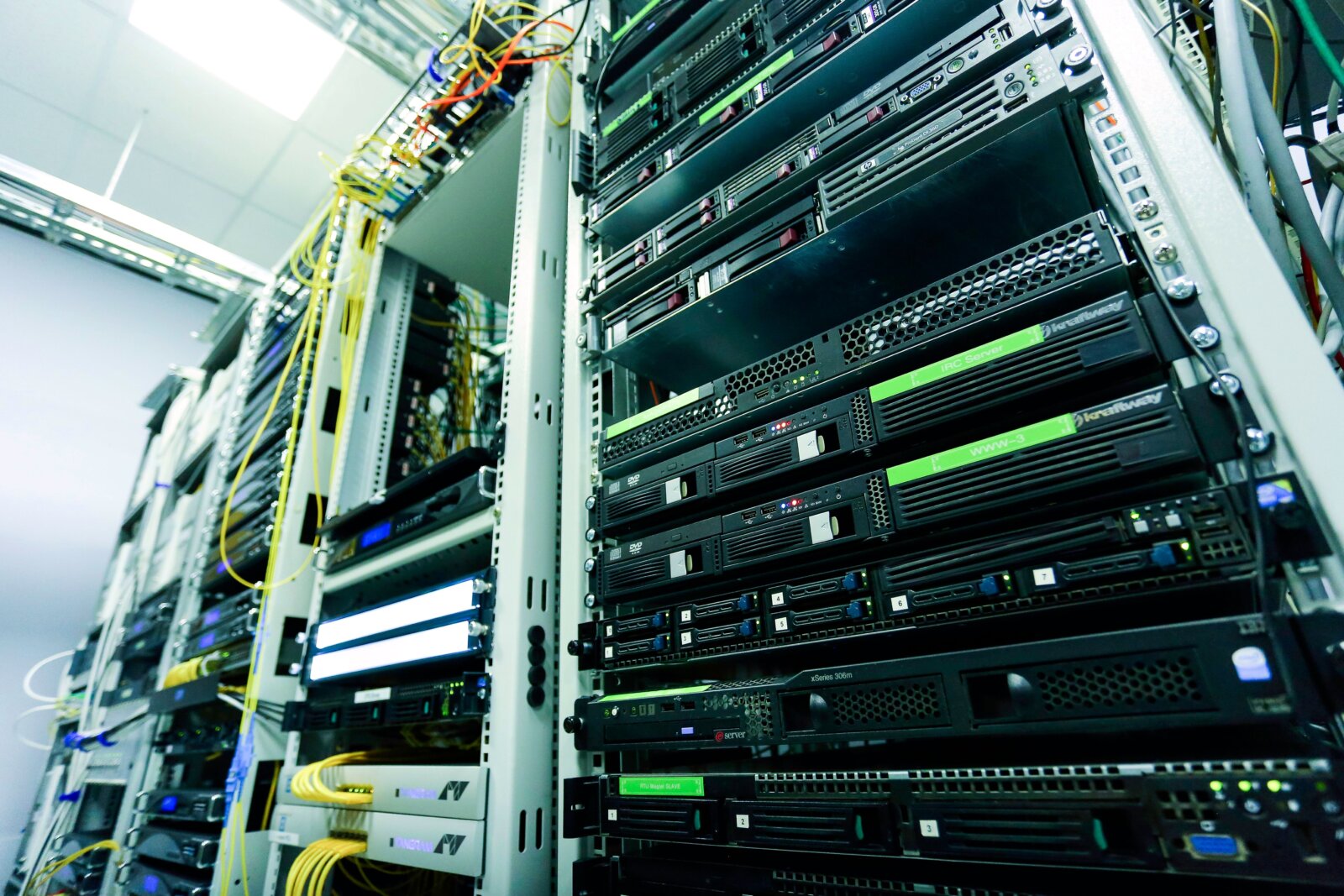
Photo by Sergei Starostin on Pexels. Server equipment and network cables.